(This is the final article of a five part series, written in 2023 and posted on my LinkedIn page, here.)
The reading. When is it over? This is a trick question and I choose petticoat as my answer. Stay with me for a bit.
In the previous articles in this series, I focused on four main themes:-
· The first of these answers this question: Why am I writing a series of articles for professionals on the subject of reading?
· The second answers the Where Do I Begin question. This is a slightly longer article that expands the space to include personal and social contexts. It ends with a list of starting points to approach whatever you are reading. (Or avoiding!)
· The third article presents some reading hacks to help a reader make the most of a single reading session.
· The fourth article assumes one session of determined reading is done. What do you do next, how do you get back to it and complete the read? So, moving forward and reading ahead!
This article looks at what to do next.
Reading about #sabinachebichi
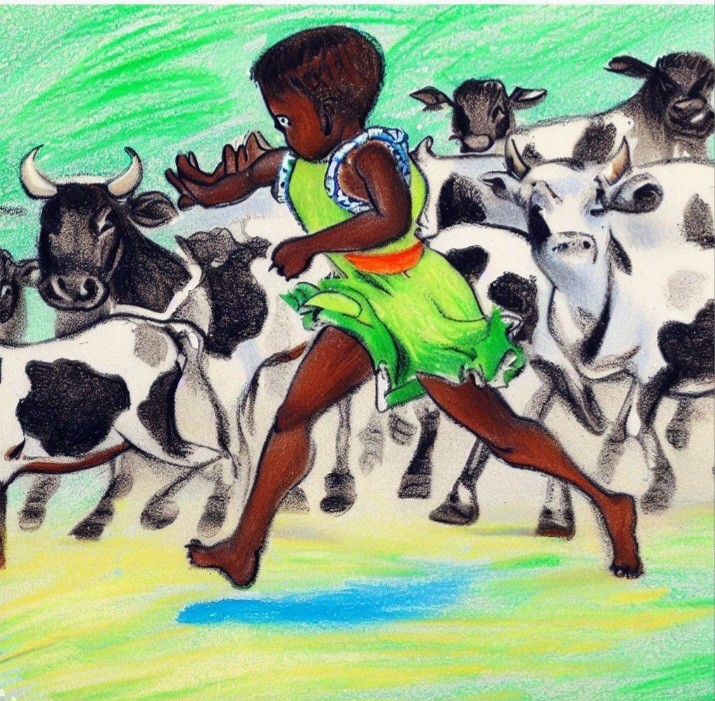
This morning, I read about #sabinachebichi born in Kenya in 1959. She ran her first race in 1972, in a place called Kechiko. She couldn’t afford and did not have running gear.
She ran:
· wearing a green petticoat
· barefoot
· she won the race.
She is sometimes referred to as the ‘petticoat princess’. I am not going to hashtag petticoat princess because the results if you google (you may want to try this) have nothing to do with Chebichi.
At the age of 14, she won a medal at the Commonwealth Games of 1974. I was half her age at the time, living in India, navigating what I would later refer to as lived experience of many things.
Then reading about #sebastiancoe
As I was reading about Sabina, I remembered #sebastiancoe. He was my childhood idol. Well one of my childhood idols, I had others, #brucelee #mohammadali #cowboy James Green, also known as Sudden. The Outlaw.
Sebastian Coe was born in London, in 1956.
Let’s refer to both these people now by their initials.
One SC is the child of an athletics coach, studied in Bridgetown Primary School, Warwickshire, continuing with higher education in England, ran really fast and won, amongst many outstandingly brilliant wins, four Olympic medals. This SC is now in sports administration and President of the World Athletics Council.
One SC is the second oldest of nine children who grew up running after cattle on a farm, studied in Mlimani Primary School, near Kitale, ran really fast and won, not only at her first local amateur athletics competition, but from the cattle farm she went to Italy and to New Zealand, winning, breaking records, at the track, and at gender representation in sport for Kenya. This SC was chosen to compete in the 1976 Summer Olympics but this was before Kenya and other African countries boycotted that Olympics. Then life took over in a different way, she got pregnant, and we really don’t know very much about her beyond that her sports career ended.
The second story makes me feel sad and angry. Some people take inspiration from her story, and I understand that. But I do not put away my feelings, they are valid, they come from my lived experience of many things.
What do you think and feel when you read this as I have presented it?
Do you think of world politics, gender politics in sport, a history of the world, black history, gender and sexuality, racism, Indian sportspersons, #indianwrestlers #vineshphogat #sakshimalik politicians and cricket ? Something else?
Do you think the story of these two SCs, both born in the 1950s, barely three years apart, may help explain equity versus equality? To children in school, to managers at corporate #hrtrainings , to a D&I newbie?
Barefoot reading and barefoot running, both are hugely powerful.
When is it over?
You decide.
What kind of a consumer, of anything, are you? Will you swallow what you are fed? Words, images, concepts, sounds and visuals? The perspective of another person, who is not you?
At a single reading session, or a lifetime of reading, whether or not one is conscious of this, there is a construction going on of one’s life and one’s growth. Actually, not just one’s own, but all those that one engages with and influences in any way, as well as all those who influence one. This is a big deal.
You decide:
· what the reading gives you
· the questions you want to ask
· the thoughts, feelings and spirit you bring to what you have read
· the uses that reading has, in work, professional development and personal growth, yours or another person’s.
As for me, the reading is over when I say it’s over.
- I am always bigger than anything I read.
- Not because I know more than the writer, but because I bring myself to the subject.
- Even as a student who knows nothing, I add my curiosity, my appreciation, my awareness, my critical thinking, my questions and my self.
- Nobody takes this away from me.
What is it like for you?
Previous: Moving forward from one reading session to the next.